Wednesday, December 17, 2014

The Dusk Series,

Northampton


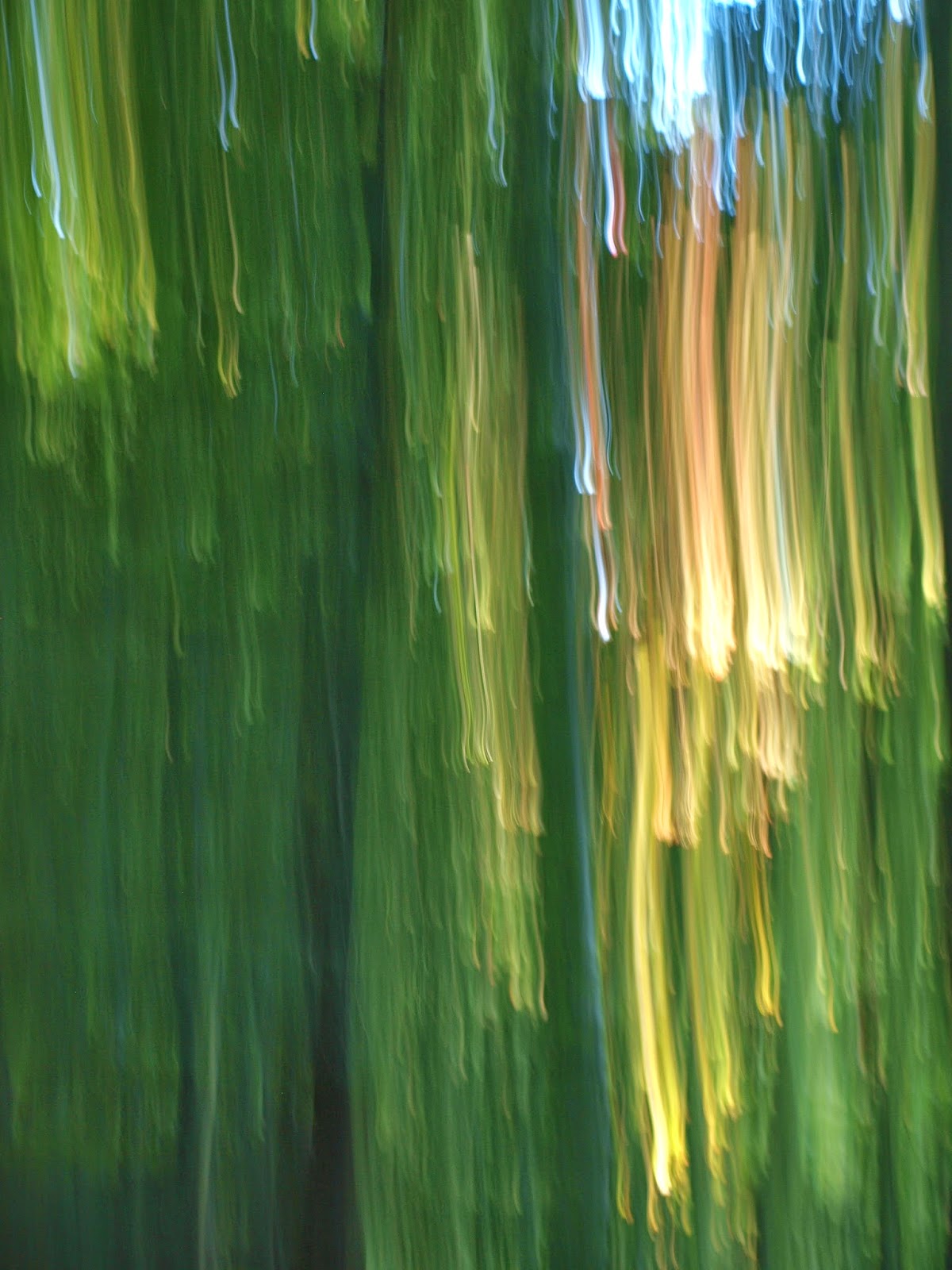
More images in the between-day-and-night series, as the colors of fall shade into those of winter. I've experimented with printing, and found a wonderful resource, Evolv Art Printing, in Easthampton, Mass, which is able to make gorgeous archival pigment prints from these images (if I say so myself).
They are now for sale. 
Thanks.


These are straightforward digital images shot on my Olympus DSLR camera--nothing's been distorted or added in photoshop. I just open the shutter and move the camera in low light. By using the camera to “document” nature in a state of temporal and spatial mutability, the images destabilize our expectations, rendering the intangible and reordering our relationship to what we call “landscape." 

Thursday, October 9, 2014

The Dusk Series


 I took these images at the MacDowell Art Colony in Peterborough, New Hampshire. I was there to write, which I did, working most of the day and coming up for air around 5pm, an hour and a half before dinner. It was then that I escaped from my studio to go for a walk. At that point, though, in the woods, it was already beginning to grow dark. I initially had a hard time shooting anything in focus, which drove me nuts. But then I thought, the hell with it, I'll exaggerate the lack of focus. I began moving the camera, and liked the effects. So I eventually opened the shutter, focused on a point of light or a patch of color, and jerked the camera around during the exposure. I looked like a bobble-head on speed or some kind of strange wood-pecker, standing in the dusk with my camera on the periphery of the woods. It sounds odd, but it was a meditative and creative exercise. Something like discovery.
I loved it.

I found that when I moved the camera, the lens "painted" with both light and color, in streaks, sparks, and glows. The results looked like pastels, like no images I've made with a camera before. I became obsessed, and began going out for twilight walks every night.

While these images aren't petrographs, they investigate the same ground: the liminal spaces between seen and intuited, light and dark, day and night, "focusing" on moments of transition rather than stability. Here's a sample of the images...

Note: This will be the first installment in an image-series based on walks I plan to take at dusk at different times of year, in different parts of the planet. Stay tuned.

Thanks for looking! -- Pam


Friday, June 13, 2014


Vessels: Land and Sea

This beautiful vessel is from Marged Pendrell's "Traces of Walks" series, which is a subset of her installation entitled "Vessels: Land and Sea." The series gathers physical evidence--in this case sand--to evoke memories of walks taken by the artist and her friends on journeys in Wales and abroad. It's made of collected sand and paper pulp; as Marged writes, "An object or material is collected as a connection to a place. It marks the quality of time passed, the essence of the place and the memory of the experience."

I found Marged's work at the Gas Gallery in Aberystwyth, Wales, and purchased the above vessel. I was struck by the strength of the her work and its beautiful, concise way of evoking place, physical activity, and memory through the physical shape of the vessel and the use of paper pulp; like books, it represents our hope of holding and containing the past. I love the fact that this vessel is filled with the stuff of itself. We are our memories.

To see more of Marged's work please visit www.axisweb.org/artist/margedpendrell
 

Thursday, December 5, 2013

Hiraeth in Northampton: An Exploration of Longing


Deep thanks to Mike for filming the intallation, and to Cassandra, Karen, and Bill for paticipating. And my thanks as well to everyone who attended!

A graphic novel based on the installation will follow...

Monday, November 11, 2013

Images from Opening Night 

of the installation

"Hiraeth in Northampton: An Exploration of Longing"


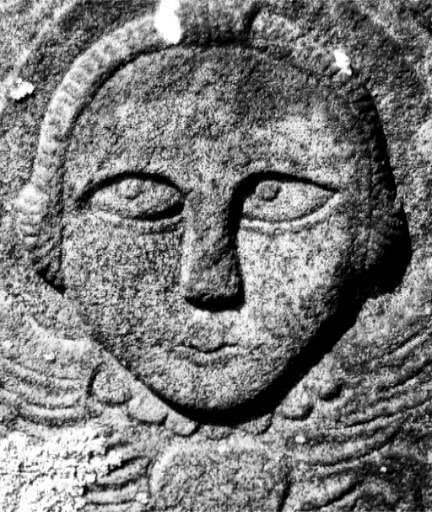
The installation will be up at Historic Northampton Museum (46 Bridge St., in Northampton, MA) until 6 December, 2013. The images printed on old windows--salvaged from local farmhouses--are from Bridge Street Cemetery in Northampton. They're all examples of beautiful, inventive, forgotten 18th century stone carvings, from the death's heads carved early in the century to more portrait-like soul effigies carved toward the end.

My hope was to initiate a conversation between past residents of the city and current ones, by inviting visitors to choose a window and stand behind it, and also to choose a line of text as a caption. The texts come from epitaphs on the gravestones--such as "Earth's highest station ends in 'here he lies'," pictured above--and also lines from poetry and discussions of "hiraeth," which is a Welsh word implying an unrequited longing: something along the lines of "The Presence of Absence," also pictured above.

Opening night was terrific: many people participated, and I thank you, one and all. If you're anywhere near Northampton, please go and have your picture taken!

Thursday, October 24, 2013


Here's a press release for my new photography installation, based on 18th century carvings in  an historic cemetery here in NoHo:

HISTORIC NORTHAMPTON

Museum & Education Center
46 Bridge St., Northampton, MA 01060

Historic Northampton, Northampton Center for the Arts, and A.P.E. Gallery present

Hiraeth in Northampton: An Exploration of Longing


 by Pamela Petro

November 8 – December 8, 2013

Opening Reception on Arts Night Out,
Friday, November 8, 2013   5-8 pm


    Hiraeth (HERE-eyth) is a Welsh word with no equivalent in English. It refers to “the presence of absence”— a yearning for the unattainable or irretrievable that exists beyond place or time. In “Hiraeth in Northampton: An Exploration of Longing,” writer and artist Pamela Petro has created an installation that cleaves to the heart of hiraeth, lodging it amongst the masterfully carved 18th century gravestones in Northampton’s Bridge Street Cemetery.
    The interactive installation turns the presence of absence into a dialogue between centuries, the living and dead, words and images, and sentient beings and stones. Viewers will be asked to have their photographs taken through a series of salvaged windows, each of which is printed with the image of an 18th century gravestone carving. Viewers will also be asked to choose a line of text to hold in the photograph, taken from one of the cemetery’s epitaphs. The final collection of photos will result in an artist’s book that catalogues a conversation between previous and current residents of the city, and will serve as testimony that hiraeth is a creative conundrum: we long for the impossible—to meet the dead, to experience the past, to inhabit the same place in another time—and while we cannot overcome hiraeth literally, we push ourselves to fill its gulf with imaginative collaborations.


Pamela Petro is a writer and artist who teaches creative non-fiction at Smith College and on Lesley University’s MFA in Creative Writing Program. She is the author of three works of travel literature and has written for publications from The New York Times to Granta and The Paris Review. In 2011 she was selected as a Grand Canyon Artist in Residence for her visual work with “petrographs,” environmental installations of photographs printed on stone. In 2007, as a Black Rock Arts Fellow, she printed silver gelatin photographs on the sidewalks of Northampton in her installation, “Fleeting Fossils.” For more images please see www.petrographs.blogspot.com, and to read more on hiraeth, go to http://www.theparisreview.org/blog/2012/09/18/dreaming-in-welsh/.